
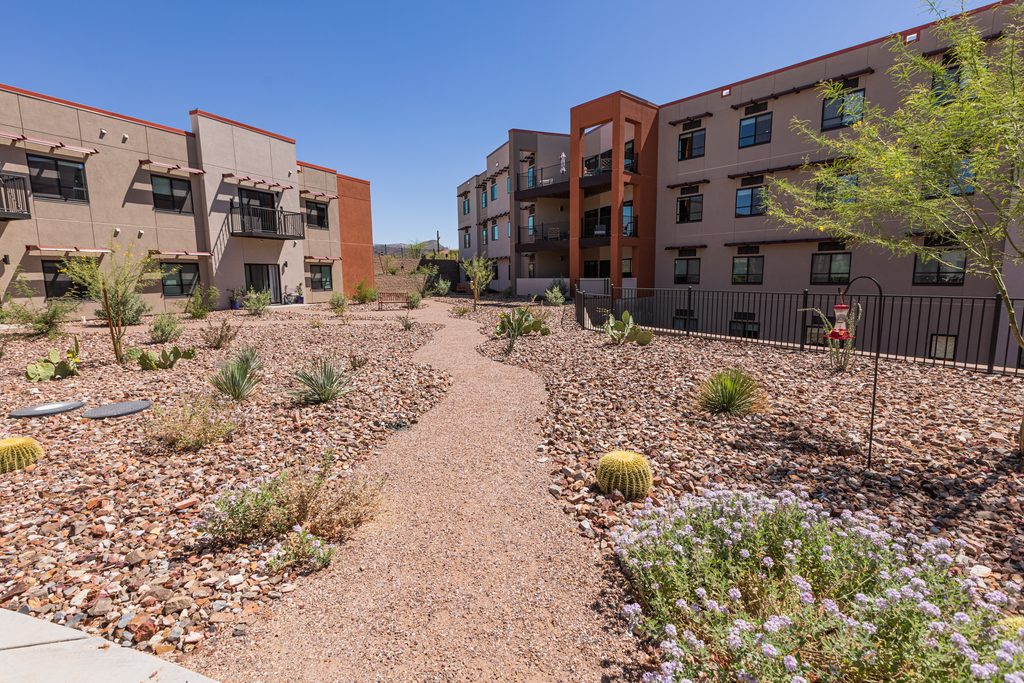
Winter changes the appearance of Arizona commercial landscapes, but it does not have to leave them looking neglected. As bermudagrass slows down and some plants lose flowers or foliage, other features become more noticeable.
For commercial properties in Tucson and Phoenix, maintaining winter curb appeal means adjusting maintenance priorities to match the season. Clean entrances, healthy planting beds and thoughtful use of color can keep a property welcoming without relying on green turf everywhere.
Set expectations for seasonal turf changes
Bermudagrass naturally loses color as temperatures drop. On properties that are not overseeded, a tan lawn can be an expected part of winter dormancy rather than a sign of poor maintenance.
Property managers should discuss these seasonal changes with their landscape team before they become a source of concern. Communicating the property’s winter turf plan can help tenants, residents and board members understand what to expect.
Dormant turf still needs attention. Removing litter, managing weeds and maintaining defined edges helps the lawn look intentional and cared for.
Focus on entrances and other visible areas
Not every part of a property needs the same level of visual attention. Entrances, building approaches, monument signs and pedestrian gathering areas often have the greatest influence on how visitors perceive the landscape.
A winter walkthrough can help identify details that need attention:
- Weeds growing through decorative gravel
- Debris collecting beneath shrubs
- Plants blocking signs or walkways
- Displaced gravel exposing bare soil
- Empty spaces left by failed plants
Addressing these issues can improve appearance without requiring a large enhancement project. Pruning should remain selective and appropriate for the plant rather than becoming a property-wide winter cutback.
Use seasonal color selectively
Seasonal flowers can bring interest to high-visibility beds and containers. However, adding more flowers is not always the most practical approach.
Choose locations where color will make a noticeable difference, then match plants to sunlight, cold exposure and irrigation conditions. A shaded courtyard may need a different planting plan from a sunny entrance beside pavement.
Keep planting areas manageable and confirm that irrigation supports the new plants without overwatering surrounding established vegetation.
Keep planting beds tidy and healthy
Winter curb appeal depends on more than flowers. Desert plants, evergreen shrubs and well-maintained groundcovers can provide structure even when turf is dormant.
Remove litter and accumulated debris while preserving appropriate soil cover. Check that irrigation leaks are not creating wet spots or encouraging weeds in gravel beds.
If a planting area repeatedly looks thin or requires frequent replacement, investigate the cause before adding more plants. Shade, drainage, irrigation coverage or an unsuitable plant selection may be contributing to the problem.
Address winter weeds early
Cooler weather does not eliminate weed growth. Winter weeds can become noticeable in turf, gravel and planting beds, especially after moisture encourages germination.
Regular inspections allow the landscape team to address weeds while they are small. Any preventive treatments should fit the property’s planting and overseeding plans, with products used according to their labels.
Maintain a consistent winter appearance
A successful winter landscape does not need to look like a summer landscape. It needs to look clean, healthy and deliberately maintained.
Santa Rita Landscaping helps commercial property managers coordinate seasonal maintenance and identify practical improvements for their Arizona properties. Contact us today to discuss a winter landscape plan that supports your property’s appearance and long-term health.