
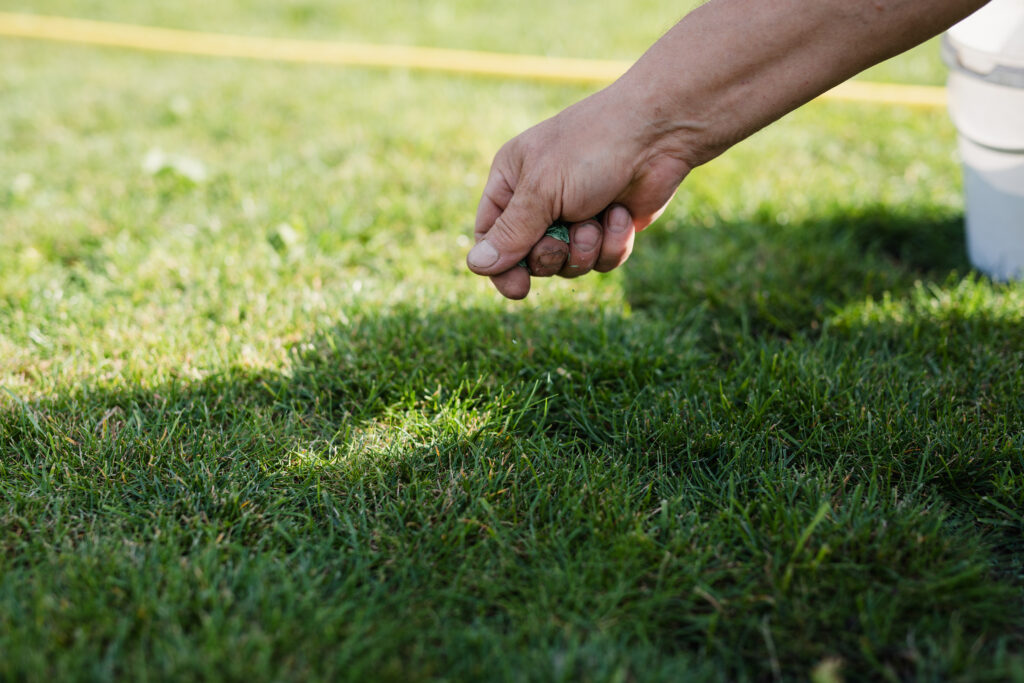
Fall lawn care in Arizona is about helping turf recover from summer while preparing it for cooler weather. By late September, commercial lawns may show signs of heat stress, irrigation problems, heavy traffic, weeds or monsoon-related damage.
The right fall plan depends partly on whether the property will be overseeded with winter ryegrass or the bermudagrass will be allowed to enter dormancy. Both approaches require proper mowing, irrigation management, weed control and monitoring.
Begin With a Fall Turf Assessment
Before making seasonal changes, evaluate how the lawn performed during summer. Look for:
- Thin or bare turf
- Uneven color
- Compacted areas
- Persistent weeds
- Standing water or runoff
- Dry areas caused by poor sprinkler coverage
- Damage from traffic, pests or disease
Brown or thinning turf does not always need more water or fertilizer. An irrigation problem, compacted soil or poor drainage may be the underlying cause. Identifying the problem first helps avoid spending money on a treatment that will not correct it.
Check Irrigation Before Changing the Schedule
Although temperatures begin to moderate in fall, Arizona turf may still need regular irrigation. Watering should be adjusted gradually based on weather, soil moisture and turf activity rather than reduced according to the calendar alone.
Inspect sprinkler heads, valves, controllers and coverage before the season changes. Repair leaks, overspray and runoff, and make sure turf zones are managed separately from trees and shrubs whenever possible.
Water conservation also needs to be part of the plan. Tucson Water is currently operating under Tier 2 of its drought plan, while Phoenix has a Stage 1 Water Alert in effect. Because requirements vary by municipality, provider and customer classification, property managers should confirm the current rules for each site.
Fall Care for Properties That Overseed
Properties that need green, functional turf through winter may choose to overseed selected areas with ryegrass. Overseeding is often best reserved for event lawns, recreation areas, prominent entrances and other spaces where winter turf serves a clear purpose.
Before overseeding:
- Correct irrigation coverage problems.
- Control mature summer weeds before they produce seed.
- Avoid heavy nitrogen applications that encourage continued bermudagrass growth.
- Adjust mowing height to prepare the turf and improve seed-to-soil contact.
- Address excessive thatch before seeding.
Timing should be based on weather rather than a fixed date. The University of Arizona Cooperative Extension recommends overseeding when daytime temperatures are approximately 80–85°F and nighttime temperatures are near 55°F.
Once the ryegrass seed is applied, several short irrigation cycles may be needed each day to keep it moist during germination. Irrigation should be monitored carefully to prevent puddling, overspray and runoff. As the grass becomes established, reduce watering frequency gradually and begin mowing once the turf reaches the appropriate height.
Property managers should also plan for approximately two weeks of limited use while the new grass becomes established.
Fall Care for Properties That Do Not Overseed
Allowing bermudagrass to enter dormancy is a practical option for properties focused on reducing water use and seasonal maintenance costs.
Continue maintaining the bermudagrass as long as it remains actively growing. Mow at the appropriate height, keep edges defined and control weeds before they spread or produce seed. As growth slows and the turf begins turning golden brown, reduce mowing and irrigation gradually.
Dormant bermudagrass may still need occasional water during extended dry periods. Irrigation should not be shut off automatically, particularly when turf areas contain or border trees that depend on the same system.
Avoid applying heavy nitrogen fertilizer to dormant turf. It will not force inactive bermudagrass to turn green and may contribute to unnecessary growth, water use or nutrient loss.
Dormant turf should continue to look intentional and maintained. Removing debris, controlling weeds and keeping borders clean can help preserve the appearance of the property even when the grass is no longer green. It may also be helpful to explain the seasonal change to tenants, residents or visitors so natural dormancy is not mistaken for neglect.
Plan Beyond the Current Season
Fall is also a good time to determine whether every lawn area continues to serve a useful purpose. Turf that supports recreation, gatherings or other regular activity may remain valuable. Small, difficult-to-irrigate or purely ornamental areas may be candidates for conversion to desert-adapted plants, shade trees or another lower-water landscape treatment.
Whether a property overseeds or allows dormancy, consistent monitoring is essential. Santa Rita Landscaping can help property managers evaluate turf health, irrigation performance, water requirements and seasonal priorities to develop an appropriate fall lawn care plan. Contact us today to get started!